Central Europe to Face More Intense and Concentrated Rainfall by the End of the Century
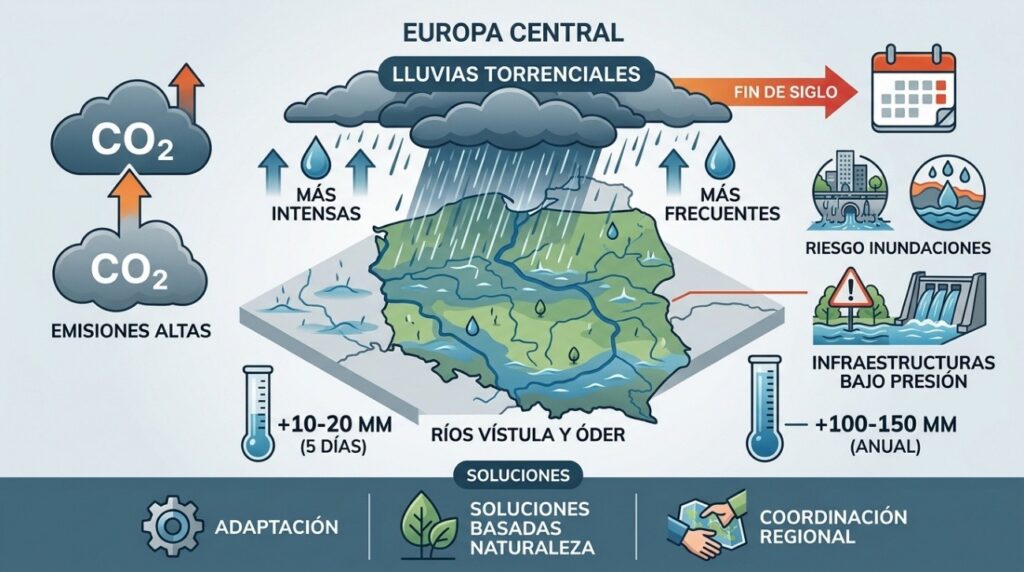
Central Europe will face a scenario of more intense and frequent torrential rainfall by the end of this century if greenhouse gas emissions are not significantly reduced. This is the main conclusion of an international study published in Scientific Reports, in which Haniyeh Salmani, a research support technician at IMDEA Water, has participated.
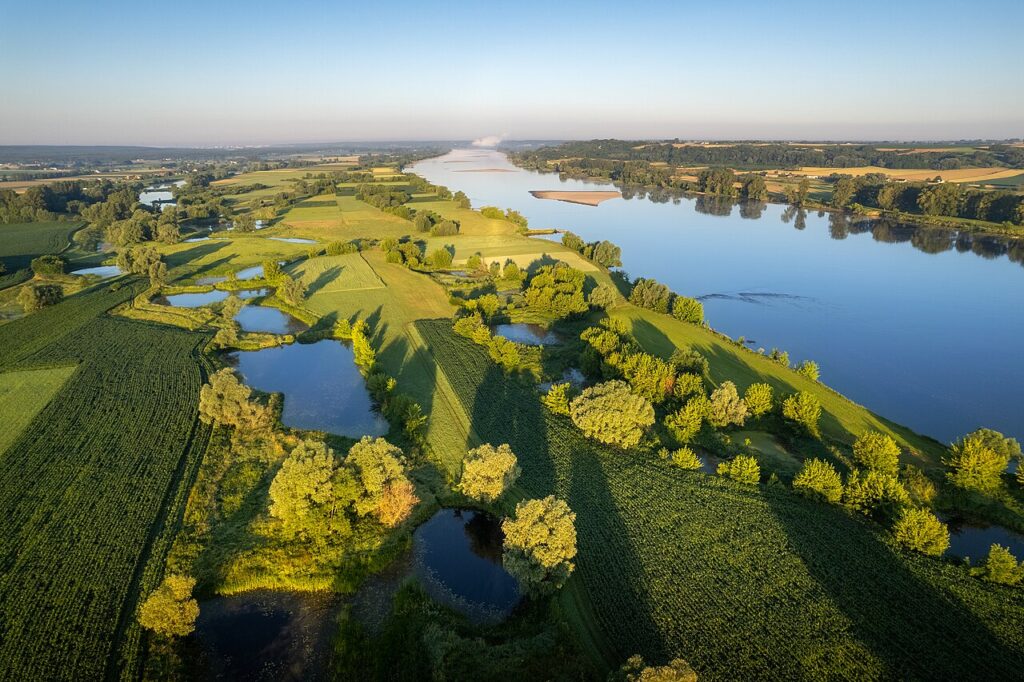
The research focuses on the Vistula and Oder river basins — a region that spans Poland and neighbouring countries — where around 40 million people live. Unlike more general analyses, the study quantifies how different aspects of extreme precipitation will change, such as the frequency of heavy rainfall and the magnitude of 1-day and 5-day events.
A change already underway
The analysis, which combines historical data (1990–2019) with projections up to the end of the century, shows that the change will not only affect the amount of rainfall, but also its distribution: a larger proportion of annual precipitation will be concentrated in fewer, but much more intense events. Specifically, the rainfall accumulated over five days could increase by between 10 and 20 mm, a key indicator for river overflow. Meanwhile, total annual precipitation would increase by between 100 and 150 mm compared to historical values.
This concentration of shorter, more intense rainfall implies a transformation of the hydrological regime and will increase flood risk, putting pressure on infrastructure such as urban drainage systems, dams, and flood defenses, which were designed based on past climate data.
Useful insights for other European river basins
Although the largest increases are expected in southern mountainous regions, such as the Carpathians and the Sudetes, the phenomenon will be widespread across the entire area, including the central lowlands, where millions of people live. The study therefore highlights the need to address the issue from a regional perspective and through coordination between countries.
“Although the study’s conclusions are focused on Central Europe,” explains Haniyeh Salmani, one of the authors of the article, “they could be extrapolated to other large European river basins,” reinforcing the need to adapt infrastructure, revise design standards, and promote nature-based solutions, such as retention areas or the restoration of floodplains.
About the research
The study is based on six regional climate models from the EURO-CORDEX project under a high-emission scenario (RCP8.5). To assess changes in precipitation, the team analyzed ten standardized climate indices, comparing the historical period with projections up to 2100.
More information
Eini, M.R., Salmani, H., Ghezelayagh, P. et al. Rising heavy precipitation extremes in Central European river basins under a high emission scenario. Sci Rep 16, 11233 (2026). https://doi.org/10.1038/s41598-026-45624-9