IMDEA Water celebrates World Water Day 2026 with talks, workshops, and guided tours
IMDEA Water joined World Water Day once again this year, celebrated on March 22, by organizing throughout the week a series of educational activities for 230 students from different educational stages across the Community of Madrid. Under the United Nations motto for this year, Where water flows, equality grows, the Institute reaffirmed its commitment to scientific outreach, environmental awareness, and the promotion of scientific vocations among young people.
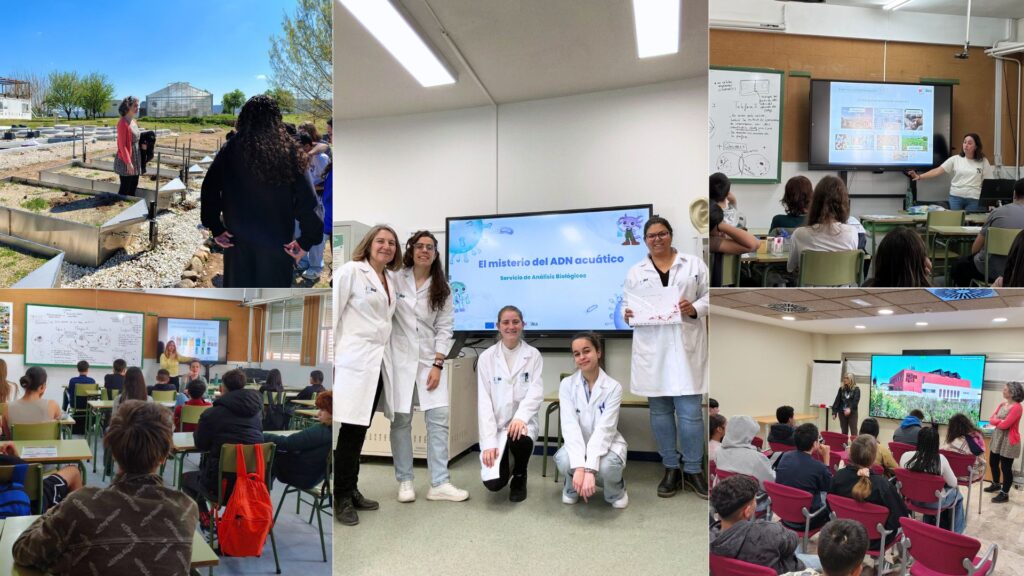
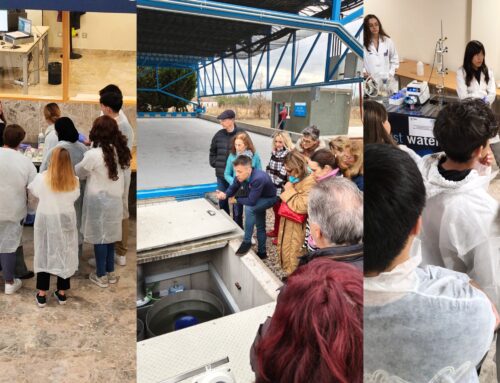
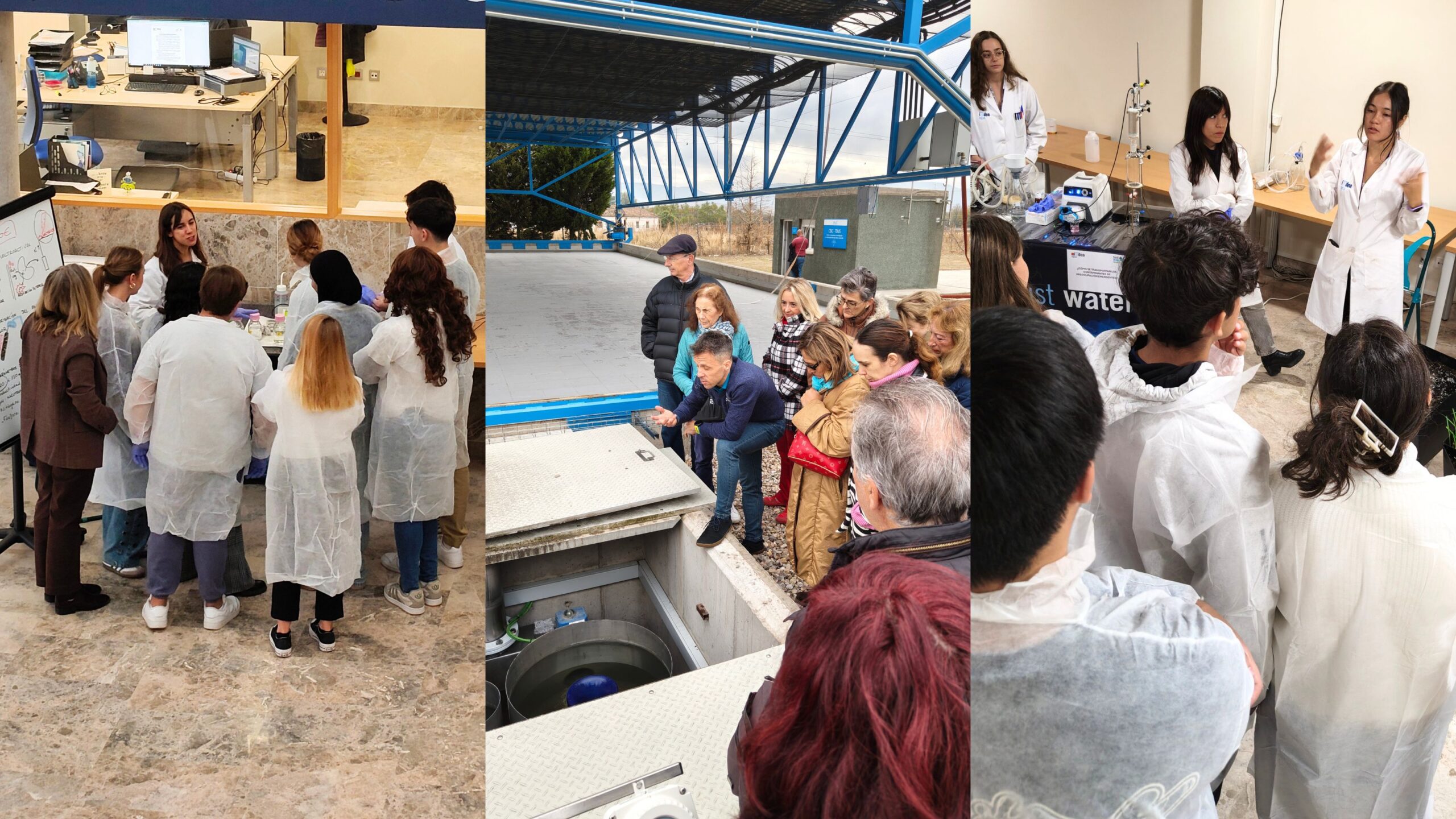
IMDEA Water team and participating students in the activities for World Water Day 2026.
The first activity took place on March 24, when IMDEA Water welcomed a group of 50 8th‑grade students from IES Numancia (Madrid). During their visit, the students learned about the research conducted at the Institute for integrated water management, including nature‑based solutions—such as forested green filters and microbial electrochemical technologies—for treating and regenerating wastewater. This activity, coordinated by Ana de Santiago, researcher of the Soil and Water Quality in the Environment (SWQ) group, and Belén Barroeta, science communicator from the Environmental Bioelectrochemistry (Bioe) group, is part of the educational program ¿Será mi vocación? of the Regional Ministry of Family, Youth and Social Affairs of the Community of Madrid, aimed at bringing scientific and technological research closer to secondary and high‑school students.
The program continued on March 25 with a talk delivered at IES Doctor Marañón in Alcalá de Henares to 130 9th‑grade students, focused on the environmental impact of pharmaceuticals present in domestic wastewater. The session explained how these compounds can reach the environment and, through surface waters, become incorporated into the food chain. Special attention was given to antibiotics, highlighting their role in the selection of resistant bacteria. Students were reminded of the importance of responsible use of these medicines, as well as the need to dispose of expired ones at the appropriate recycling points (SIGRE in Spain). The activity was delivered by Lorena Martínez García and Leire Besga Oyanarte from the SWQ group and was carried out in collaboration with the following projects and grants:
- Reuse4Food Projectv (CIVP22S18420), funded by the Ramón Areces Foundation.
- PIPF‑2024/ECO‑35722 Grant, funded by the Community of Madrid.
- Researchers at Schools (RAS), an initiative linked to the Madrid European Researchers’ Night project (NIGHTMADRID), a science outreach project coordinated by the madri+d Foundation and funded by the European Union under the Horizon Europe Programme, within the Marie Skłodowska‑Curie actions, grant agreement No. 101.162.110.
The week of activities concluded on March 26 at CEIP Dulcinea in Alcalá de Henares, where 50 preschool and primary school students took part in the workshop “The Mystery of Aquatic DNA.” The activity began with a simple introduction to the cell and genetic material and continued with a demonstration of DNA extraction from strawberries, a fundamental technique for studying microbial diversity in water. Participants then performed their own extraction following a very simple protocol using everyday materials. The workshop was delivered by Ana Isabel Morato Cerro, laboratory technician from the Microbial Ecology Unit, and Iame Alves Guedes, technician responsible for the Biological Analysis Service and the Microbial Ecology Unit, respectively. The activity was part of the Researchers at Schools (RAS) initiative, linked to the same Madrid European Researchers’ Night project (NIGHTMADRID) and funded by the European Union under the Horizon Europe Programme, within the Marie Skłodowska‑Curie actions, grant agreement No. 101.162.110.