IMDEA Water participates in international study detecting pfas, the so-called “forever chemicals”, in 93% of European rivers
- A consortium analyzed 280 river sites across 31 European countries and found that 61% of locations exceed the environmental quality standards established for these substances in surface waters.

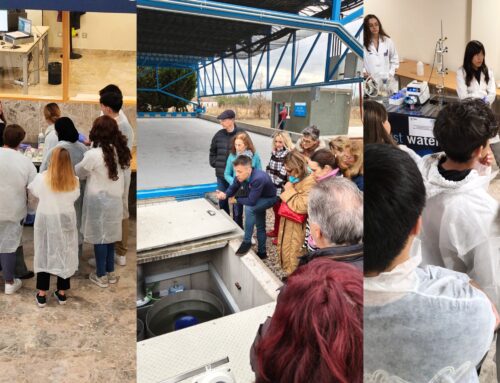
IMDEA Water researcher Paula Redondo-Hasselerharm taking samples at one of the sampling points.. Credit: IMDEA Water.
Researchers from the Applied Aquatic Ecology Group at IMDEA Water have participated in the first harmonized continental-scale assessment of per- and polyfluoroalkyl substances (PFAS) in European rivers. The study, which monitored 93 rivers throughout the four seasons of the year, reveals an almost ubiquitous presence of these compounds, known as “forever chemicals”, closely linked to human pressure and industrial activity in each region. The research, led by a team from the University of York and carried out in collaboration with a broad network of European scientific institutions, was recently published in the journal Water Research.
At least one of the seven priority PFAS compounds was detected at 93% of the 280 sampling locations studied, including sections of the Manzanares River, Henares River, Jarama River, and Pantueña Stream in the Madrid region. The findings show that the highest levels of contamination are concentrated in southern, western, and southeastern Europe, identifying hotspots associated with proximity to landfills, wastewater treatment plants, and industrial complexes. The most frequently detected compound was perfluorohexanoic acid (PFHxA), found in 52% of samples, followed by perfluorooctanoic acid (PFOA), detected in 43%.
The study found that human activity, measured through the Human Footprint Index, is the most important socioeconomic factor for predicting the presence of certain PFAS compounds in aquatic ecosystems. Researchers also observed that PFAS levels increased in waters with higher electrical conductivity, indicating that these substances are often associated with other urban and industrial pollutants.
The highest concentrations were recorded during the summer, when river flows are lower and contaminants are less diluted. From a regulatory perspective, 61% of monitoring stations exceeded the European Commission’s environmental quality standard of 4.4 nanograms per liter for the sum of PFAS compounds, highlighting a widespread ecological risk across the river basins assessed.
The authors emphasize that these findings should help redefine European environmental monitoring strategies. They go even further: “We need to tackle pollution sources in order to protect aquatic ecosystems and human health,” says Paula Redondo-Hasselerharm, researcher at IMDEA Water and one of the study’s authors. They also stress the need to expand monitoring efforts to a broader range of emerging contaminants in order to better understand their cumulative impacts and support the development of new removal and treatment technologies.
In addition to Paula, the researchers from IMDEA Water’s Applied Aquatic Ecology Group who participated in the study are Andreu Rico, affiliated researcher at the University of Valencia, and Melina Celeste Crettaz-Minaglia, who served as a laboratory technician at IMDEA Water during the study.
Understanding PFAS and their environmental impact
Per- and polyfluoroalkyl substances (PFAS) comprise a family of thousands of synthetic chemicals that have been used for decades in waterproof products, firefighting foams, non-stick cookware, and food packaging materials because of their exceptional resistance to heat, water, and chemical degradation.
It is precisely this resistance that has earned them the name “forever chemicals.” Their persistence in the environment promotes accumulation in ecosystems and living organisms. Numerous studies have linked prolonged exposure to certain PFAS compounds to immune system effects, hormonal disruption, thyroid disorders, and an increased risk of certain diseases, as well as negative impacts on aquatic biodiversity.
Article Reference
Li, J., Boxall, A. B. A., Swan, C., Hoeks, S., Lai, R. W. S., Wilkinson, J. L., et al. (2026). Pan-continental assessment of socioeconomic and environmental predictors of PFAS occurrence in European rivers from a harmonised monitoring study. Water Research, 305, 126481. https://doi.org/10.1016/j.watres.2026.126481