


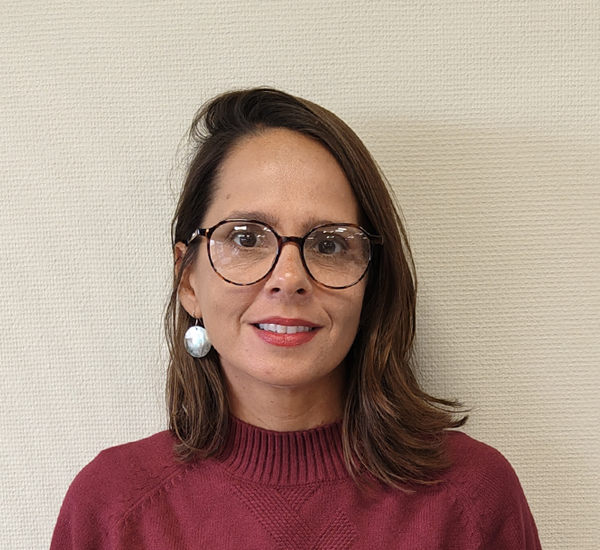
Dr. Mariana Vellosa Capparelli
Researcher
PhD:
Sciences. University of São Paulo. Brazil.
Research:
Impacts of anthropogenic stressors on freshwater and coastal ecosystems
Joining Date:
02/2026
Address:
IMDEA Water. Avenida Punto Com, 2. Parque Científico Tecnológico de la Universidad de Alcalá. Alcalá de Henares. 28805 MADRID
E-mail:
mariana.capparelli@imdea.org
Mariana Capparelli holds a Ph.D. and M.Sc. in Sciences, with an emphasis on Comparative Biology, from the University of São Paulo (Brazil), and a degree in Biology from São Paulo State University (UNESP).
She is currently a Researcher at the IMDEA Water Institute, where she leads the Aquatic Ecology and Biotechnology Group. Her research addresses the impacts of anthropogenic stressors—including emerging contaminants, mining activities, pesticides, and climate change—on freshwater and coastal ecosystems. By integrating ecotoxicology, ecology, and applied biotechnology, her work contributes to advancing scientific knowledge and developing solutions to enhance ecosystem resilience and water resource sustainability under global change scenarios.
Dr. Capparelli has extensive international research experience. From 2017 to 2021, she was a researcher at the Universidad Regional Amazónica IKIAM (Ecuador), where she focused on freshwater conservation in the Amazon and the application of ecotoxicological tools to assess environmental impacts. Between 2021 and 2025, she worked at the Institute of Marine Sciences and Limnology of the National Autonomous University of Mexico (UNAM), investigating the combined effects of emerging pollutants and climate change on coastal ecosystems.
She has authored more than 70 peer-reviewed publications in 2026 and has built a strong international collaboration network across Europe and Latin America. In addition to her research leadership, she plays an active role in the scientific community as Senior Editor of the Bulletin of Environmental Contamination and Toxicology and Associate Editor of Environmental Toxicology and Chemistry (SETAC), contributing to research quality, dissemination, and knowledge transfer at the global level.

