Soil and Water Quality in the Environment (SWQ)
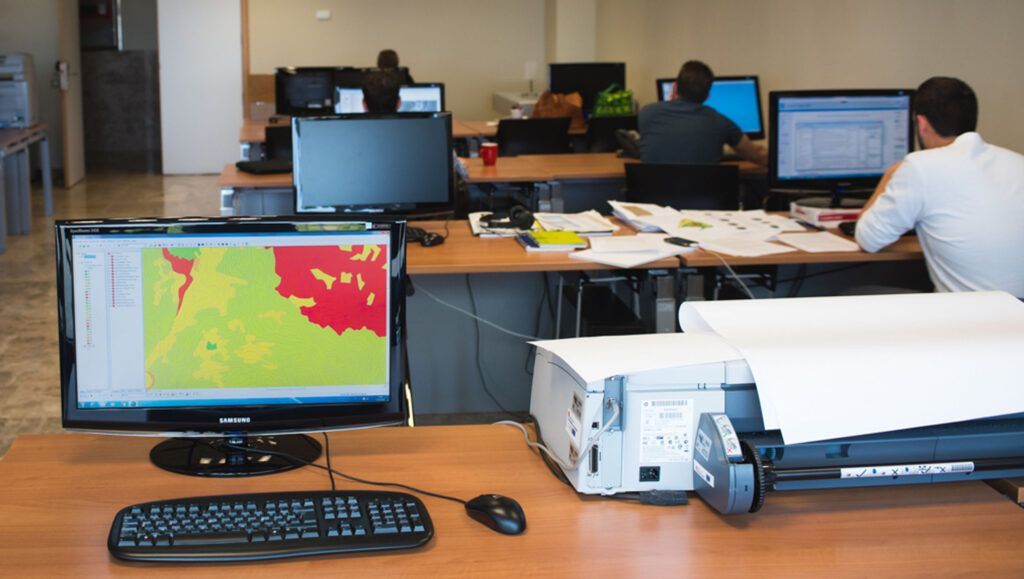
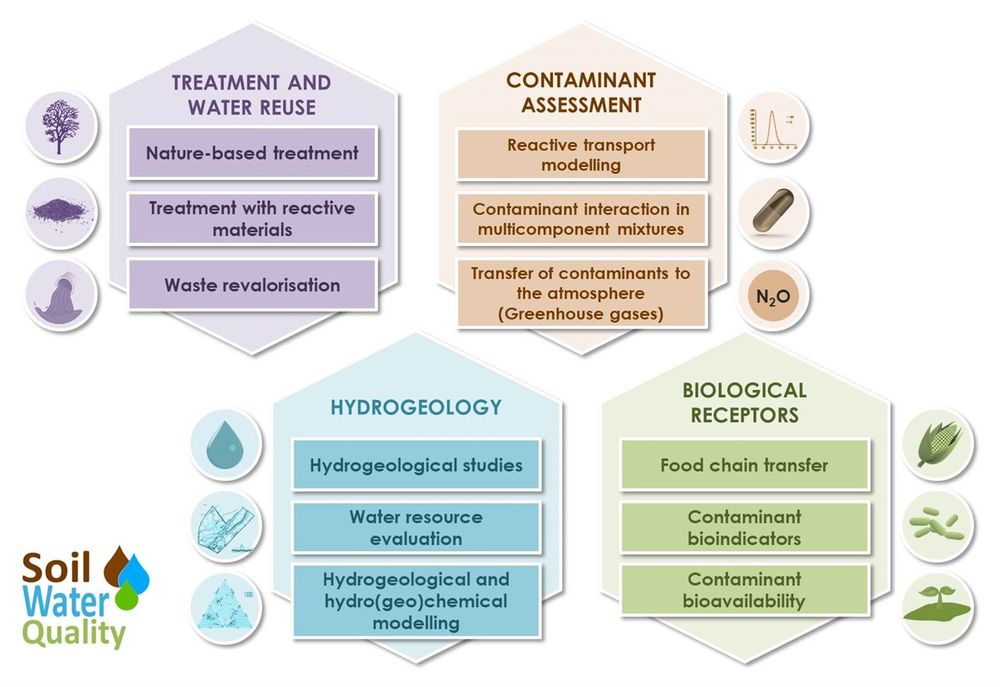
The Soil and Water Quality in the Environment (SWQ) group focuses on the assessment of environmental contamination within the water–soil–plant system and on the optimization of nature-based solutions for water treatment and reuse.
Established Research Lines
- Adaptation and optimization of treatment and reuse technologies based on Nature-Based Solutions (NbS).
- Investigation of the behavior and interactions of emerging chemical and biological contaminants (antibiotic-resistant bacteria – ARB, antibiotic resistance genes – ARG, micro- and nanoplastics, pharmaceuticals, and PFAS) across different environmental compartments, including:
- Mobility and transport processes.
- Transfer into the food chain through crop uptake and consumption.
- Assessment of water quantity and quality resources through hydrogeological studies based on the application of multiple tools, including numerical, hydrochemical, and hydrogeochemical models.
Emerging Research Lines
- Bioremediation of contaminated soils through the use of bacterial consortia.
- Reuse of materials in technosol development to promote resource recovery and circular economy approaches.

What do we do?
In 2015, the United Nations adopted the 2030 Agenda for Sustainable Development. This Agenda has 17 Sustainable Development Goals, adopted by all UN Member States, which are a universal call to action to end poverty, protect the planet and improve the lives and prospects of everyone, everywhere.
The research carried out by the group contributes to achieving the following Sustainable Development Goals:


Research team

Dr. Irene de Bustamante Gutiérrez
Director

Dr. Raffaella Meffe
Deputy director

Dr. María de las Virtudes Martínez Hernández
Researcher

Dr. Ana de Santiago Martín
Researcher
Dr. Alicia Fuertes Sánchez
Researcher
Dr. Lucila Candela Lledó
Expert researcher in hydrogeology

Lesly Ayala Cabana
Predoctoral researcher
Isabel Domarco Sagra
Predoctoral researcher
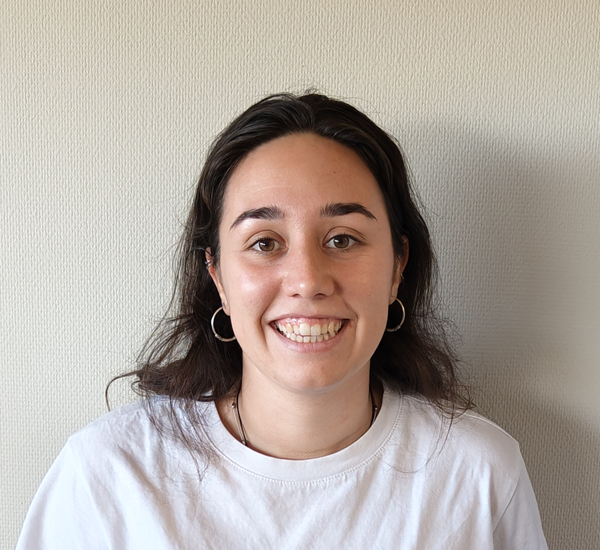
Leire Besga Oyanarte
Predoctoral researcher

Ana García Arcos
Advanced research support technician
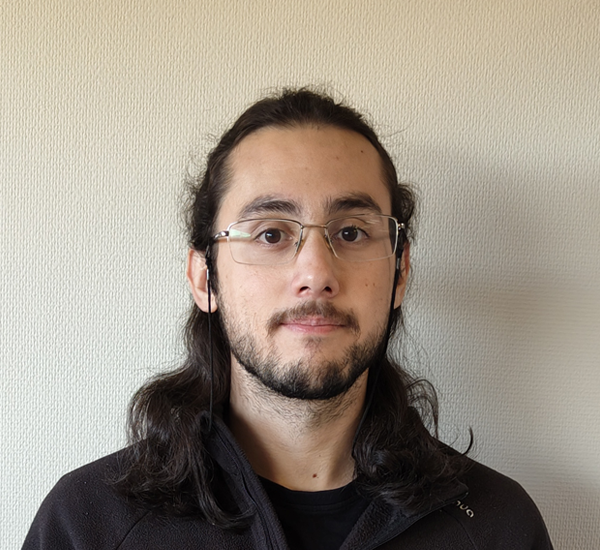
Diego Hermoso de Mendoza Santos
Support Technician
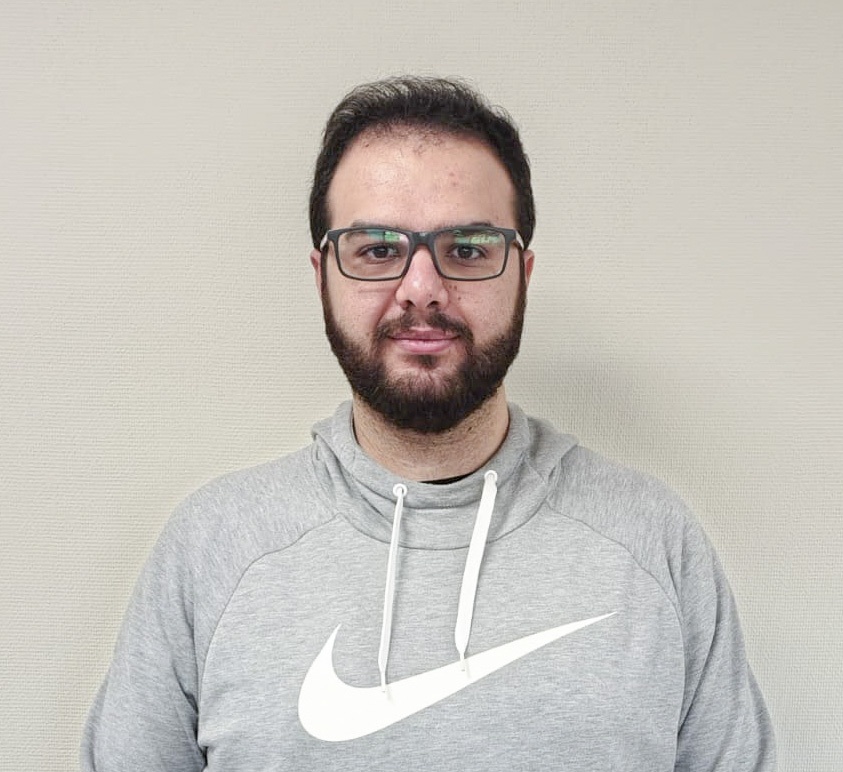
Antonio Tornero Castejón
Predoctoral researcher
Dr. Irene de Bustamante Gutiérrez
Director
Ph.D. in Geology from the UCM, Professor of the Department of Geology, Geography and Environment of the University of Alcalá and Director of IMDEA Water. Among its lines of research, hydrogeology, quality and water reuse should be highlighted. She has participated in more than 80 projects and research contracts, being in 57 of them principal investigator, and she has carried out 32 projects for companies.
- irene.debustamante@agua.imdea.org
- IMDEA Water. Avenida Punto Com, 2. Parque Científico Tecnológico de la Universidad de Alcalá. Alcalá de Henares. 28805 MADRID

Dr. Raffaella Meffe
Deputy director
Deputy director of IMDEA Water. PhD in hydrogeology at the Freie Universität of Berlin (2011), MSc in Geological Science at the Sapienza University of Rome (2007).
- raffaella.meffe@agua.imdea.org
- IMDEA Water. Avenida Punto Com, 2. Parque Científico Tecnológico de la Universidad de Alcalá. Alcalá de Henares. 28805 MADRID

Dr. María de las Virtudes Martínez Hernández
Researcher
PhD in Hydrology and Water Resources Management at University of Alcala (2015), MSc in the same programme (2008) and BSc in Environmental Sciences at University of Alcala (2007).
- virtudes.martinez@agua.imdea.org
- IMDEA Water. Avenida Punto Com, 2. Parque Científico Tecnológico de la Universidad de Alcalá. Alcalá de Henares. 28805 MADRID

Dr. Ana de Santiago Martín
Researcher
She has a European PhD in Pharmacy (2013) at UCM. She worked as a Postdoctoral Researcher at Laval University (Quebec) (2014-2016). She joined IMDEA Water in 2017. Her research career has been developed on evaluation of soil and water contamination.
- ana.desantiago@agua.imdea.org
- IMDEA Water. Avenida Punto Com, 2. Parque Científico Tecnológico de la Universidad de Alcalá. Alcalá de Henares. 28805 MADRID

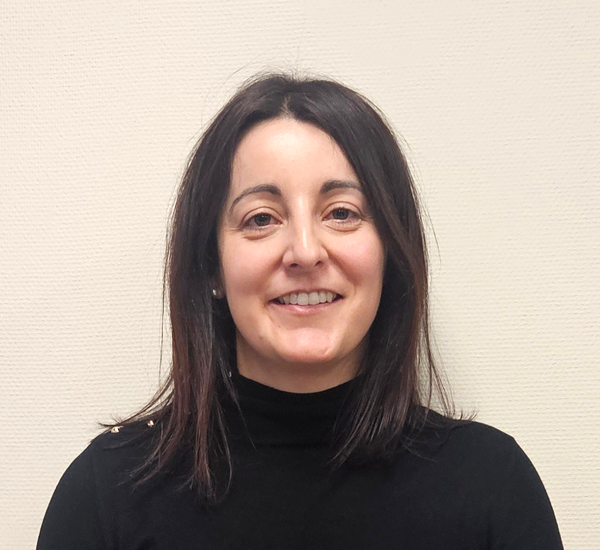
Dr. Alicia Fuertes Sánchez
Researcher
PhD in Engineering for Rural and Civil Development from the University of Santiago de Compostela (2023) and Agricultural Engineer from the Technical University of Madrid (2009).
See full profile- alicia.fuertes@agua.imdea.org
- IMDEA Water. Avenida Punto Com, 2. Parque Científico Tecnológico de la Universidad de Alcalá. Alcalá de Henares. 28805 MADRID
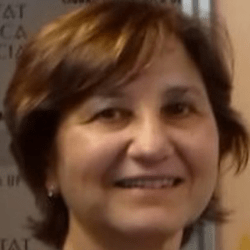
Dr. Lucila Candela Lledó
Expert researcher in hydrogeology
Dr. Lucila Candela Lledó, Ph.D. in Groundwater hydrology. She worked as Professor at the Technical University of Catalonia. Specialist in water resources, groundwater and vadose zone. She has participated in more than 50 research projects at national and international level funded by different institutions (MICIN, EU, UNESCO, OIEA, WB, Kuwait).
- lucila.candela@agua.imdea.org
- -
Lesly Ayala Cabana
Predoctoral researcher
She graduated in Chemistry from the University Complutense of Madrid (2018). She got her master's degree in Ecosystem Restoration from the same university (2019).
- lesly.ayala@agua.imdea.org
- IMDEA Water. Avenida Punto Com, 2. Parque Científico Tecnológico de la Universidad de Alcalá. Alcalá de Henares. 28805 MADRID

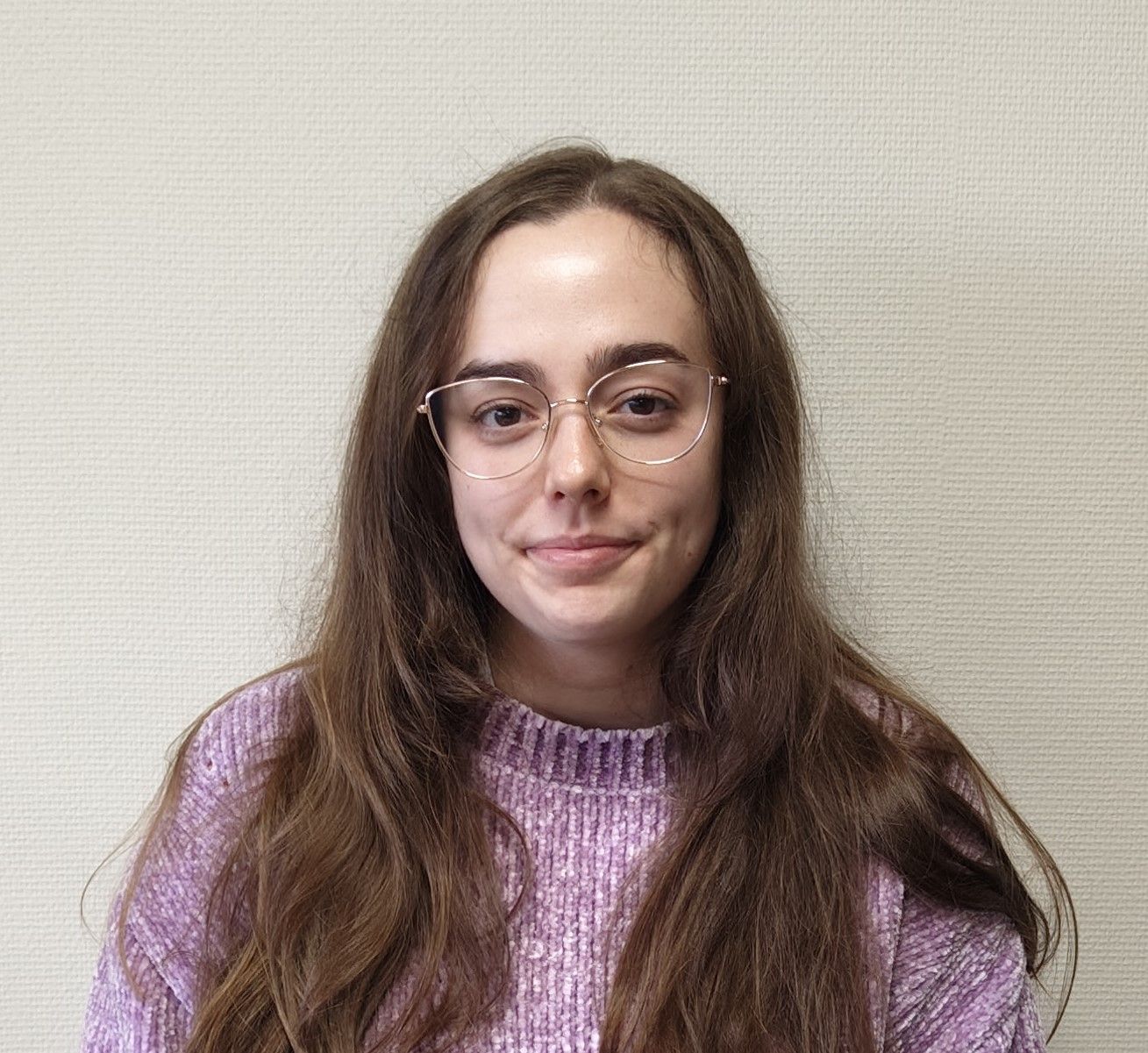
Isabel Domarco Sagra
Predoctoral researcher
Graduated in Biology from the Universidad Autónoma de Madrid (2022) and Master’s in Biodiversity from the same university (2023).
- isabel.domarco@agua.imdea.org
- IMDEA Water. Avenida Punto Com, 2. Parque Científico Tecnológico de la Universidad de Alcalá. Alcalá de Henares. 28805 MADRID
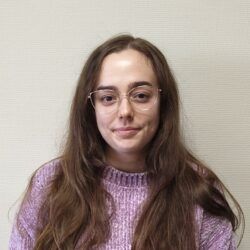
Leire Besga Oyanarte
Predoctoral researcher
She graduated in Biology (2020) and holds a master’s degree in industrial and environmental biotechnology (2022) from the Complutense University of Madrid (UCM).
- leire.besga@agua.imdea.org
- IMDEA Water. Avenida Punto Com, 2. Alcalá de Henares. 28805 MADRID
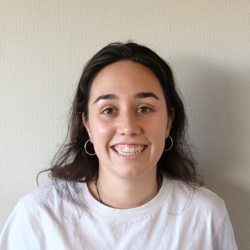
Ana García Arcos
Advanced research support technician
She graduated in Environmental Sciences from the Universidad Autónoma de Madrid (2017), and she got a master’s degree in Ecology from the Universidad Autónoma de Madrid (2019).
- ana.garcia@agua.imdea.org
- IMDEA Water. Avenida Punto Com, 2. Parque Científico Tecnológico de la Universidad de Alcalá. Alcalá de Henares. 28805 MADRID

Diego Hermoso de Mendoza Santos
Support Technician
Higher Technician in Forest Management and the Natural Environment from the IES Centro de Capacitación Agraria of Villaviciosa de Odón (2024). Completed an internship at Viveros Sánchez.
- diego.hermoso@agua.imdea.org
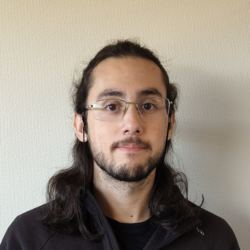
Antonio Tornero Castejón
Predoctoral researcher
Graduate with a degree in Biology by the University of Alcalá (2023) and a Master’s degree in Microbiology by the Autonomous University of Madrid (2024).
- antonio.tornero@agua.imdea.org
- IMDEA Water. Avenida Punto Com, 2. Parque Científico Tecnológico de la Universidad de Alcalá. Alcalá de Henares. 28805 MADRID